













Under the sun of the East African plateau, Kenya's agricultural economy is entering a golden period of diversified development. Among these ventures, pig farming—with its unique advantages of short production cycles and high returns—has become an increasingly important choice for farmers, whether in small-scale family operations or large-scale farms.
Benefits of Pig Farming in Kenya
Strong Market Dynamics
Domestic demand for pork in Kenya is growing at an annual rate of 5%-8%, with stable and robust procurement demand for high-quality hogs particularly evident in urban areas such as Nairobi and Mombasa, driven by the catering industry and meat processing plants. On one hand, Kenya's population structure features a high proportion of young people, whose acceptance of pork products like sausages and bacon is increasing year by year. On the other hand, traditional beef and mutton prices fluctuate significantly, whereas pork prices remain relatively stable over the long term (approximately 250-300 Kenyan shillings per kilogram), offering greater market resilience. Furthermore, the Kenyan government's supportive policies for the agricultural supply chain provide pig farmers with market access and technical training, reducing sales challenges.
Biological Advantages
Pigs boast a short growth cycle and high reproductive efficiency, representing their core biological advantages. Compared to cattle (2-3 years) and sheep (1-1.5 years), pigs require only 6-8 months from piglet to market weight (under high-efficiency farming models), enabling rapid capital turnover. Additionally, sows possess strong reproductive capacity. A healthy sow can produce 2-3 litters annually, each yielding 8-12 piglets. With proper management, a farm's breeding herd can rapidly expand within 1-2 years, laying the foundation for bulk market-ready production.
Multiple Revenue Streams
The pig farming industry generates profits not only through the sale of live pigs but also by expanding multiple income streams to mitigate the risks associated with relying on a single revenue source. Beyond the core business of selling market hogs, farmers can increase their income through the following avenues: First, selling piglets. Targeting the demand for piglets among small-scale farmers, healthy crossbred piglets can be sold individually (approximately 5,000-8,000 Kenyan shillings per head). Second, processing byproducts such as pig bristles for brushes and fermented manure as organic fertilizer sold to local farmers. Third, developing a “pig-to-farm” circular model where manure fertilizes corn, cassava, and other feed crops, reducing feed procurement costs while boosting agricultural income.
Choose the Right Pig Breeds for Fast Growth
Large White Pig
The Large White pig is a world-renowned lean-meat breed and the preferred choice for large-scale farms in Kenya. Its key advantages include rapid growth rates, with daily weight gains reaching 700-800 grams during the fattening period, enabling pigs to exceed 100 kilograms within four months. It boasts high feed conversion efficiency, requiring only 2.8-3.2 kilograms of feed per kilogram of weight gain. With a lean meat ratio of 60%-65%, it commands higher market prices.
The Large White exhibits strong adaptability, thriving in Kenya's highland climate (15-25°C). However, it demands high-quality protein feed and nutritional supplements. Large-scale farmers are advised to prioritize purebred Large Whites or crossbreeding with local breeds (hybrids achieve daily gains of 500-600 grams and demonstrate superior adaptability).
Changbai Pig
The Changbai pig originates from Denmark and is another high-quality lean meat breed widely raised in Kenya's coastal regions and central highlands. Its growth rate is comparable to the Large White pig, with a daily weight gain of 650-750 grams and a market weight reaching 110-130 kilograms. It features a slender body, high dressing percentage (72%-75%), and tender meat.
The Longwhite's key advantage lies in its strong reproductive performance, with sows producing 12-14 piglets annually and high piglet survival rates, making it well-suited for farmers practicing self-breeding and self-rearing. During rearing, attention must be paid to ensuring proper ventilation in housing to prevent respiratory diseases caused by high temperatures and humidity.
Duroc Pig
The Duroc pig is a renowned terminal sire breed, renowned for its exceptionally rapid growth rate. During the finishing phase, daily weight gain can reach 800-900 grams per day, making it one of the fastest-growing pig breeds currently in Kenya. It features well-developed musculature with a lean meat ratio of 62%-68%, delivering excellent meat texture and high market recognition.
Duroc pigs are well-suited as crossbred sires. The resulting three-way crossbred pigs, produced by crossing Durocs with Large Whites and Landraces, achieve daily weight gains exceeding 900 grams and reach market weight in just 4 months, forming a “golden combination” for rapid fattening. However, Durocs exhibit slightly lower heat tolerance. When raised in Kenya's coastal high-temperature regions, effective cooling measures (such as installing fans and sprinkler systems) are essential.
Local Crossbred Pigs
For small-scale farmers or beginners, we recommend first-generation crossbreeds between local breeds (such as the Kenyan Red) and Large White or Landrace pigs. These crossbred pigs retain the disease resistance and ability to thrive on coarse feed of local breeds while inheriting the rapid growth advantages of imported breeds. They can achieve daily weight gains of 550-650 grams, reach market weight in about 6 months, and carry lower farming risks.
Core Principles for Breed Selection:
1. Align with Farm Scale: Large-scale operations (annual output ≥500 pigs) may select purebred Large White, Landrace, or three-way crossbred pigs for maximum growth rates. Small-scale farmers (annual output ≤50 pigs) should prioritize first-generation crossbreds to reduce management complexity.
2. Adapt to Local Climate: Highland regions (Nairobi, Naivasha) suit Large White or Landrace pigs; coastal areas (Mombasa, Malindi) recommend Duroc crossbreeds with cooling measures; arid zones (Turkana) can utilize local crossbreeds for drought tolerance and coarse feed adaptation.
- Matching Feed Conditions: If high-quality feed and additives can be reliably supplied, prioritize purebred imported breeds. If feed resources are limited, choose crossbred pigs that tolerate coarse feed.
Implement Effective Pig Housing and Farm Management
Pig growth rates are closely tied to environmental conditions—optimal temperatures, ample water sources, and clean housing reduce disease incidence, improve feed efficiency, and enable pigs to “eat well and grow fast.” Conversely, hot, humid, and crowded environments trigger stress responses in pigs, leading to decreased appetite, stunted growth, and even disease outbreaks.
Key Considerations for Site Selection and Planning of Pig Farms in Kenya
1. Climate Suitability: Maintain temperatures between 15-25°C
Kenya's diverse climate presents distinct conditions:
- Highland regions (above 1,500 meters elevation) feature annual average temperatures of 18-22°C, making them ideal for pig farming;
- Coastal areas experience annual averages of 25-30°C with high temperatures and humidity during summer; Northern arid regions experience significant temperature fluctuations (daytime over 30°C, nighttime below 10°C).
Pigs thrive within 15-25°C. Temperatures exceeding 30°C cause reduced feed intake (3% decrease per 1°C rise) and lower daily weight gain. Below 10°C, pigs expend more energy maintaining body temperature, leading to decreased feed conversion efficiency. Therefore, site selection should prioritize:
- Prioritize plateau regions at 1,200-2,000 meters elevation, avoiding coastal high-temperature zones and northern frigid areas.
- Barn design must balance cooling and insulation: Install ventilation fans, shade nets, and ground sprinklers for summer cooling; construct insulated sheds with bedding materials (e.g., hay, sawdust) to maintain winter temperatures.
2. Sufficient Water Supply: Average daily water intake should not be less than 20 liters per pig.
Water is essential for pig growth, and water intake directly impacts feed consumption and digestion. Finishing pigs require an average daily water intake of 20-30 liters per pig, which can reach up to 40 liters per pig during hot summer months. Insufficient water supply leads to reduced appetite, impaired digestion, and a 10%-15% decrease in daily weight gain.
Site selection must prioritize proximity to clean water sources (e.g., rivers, wells, reservoirs) meeting potable water standards (odorless, free of heavy metals, total bacteria count ≤100/ml). Automatic waterers are recommended to ensure constant access to clean water while minimizing waste.
3. Land Planning: Optimize Layout to Prevent Overcrowding
- Pen Area: Each finishing pig requires 1.5–2 square meters of activity space. Excessive density (over 2 square meters per pig) leads to fighting, heightened stress responses, and reduced growth rates. For example, a pen housing 10 finishing pigs must be no less than 15 square meters.
- Site Layout: Barns must be located at least 500 meters from residential areas and water source protection zones to prevent pollution and disease transmission. Designate separate zones for livestock housing, feed storage, and manure handling, with livestock areas positioned upwind and manure zones downwind.
- Floor Design: Floors should be poured concrete with a 3%-5% slope for drainage and cleaning. Apply anti-slip treatment to prevent injuries from slipping. Mulch (e.g., rice husks, sawdust) may be spread to reduce foot diseases and enhance comfort.
Disease Prevention for pig farming
Key Disease Prevention and Control Measures
- African Swine Fever (ASF): ASF poses the primary threat to Kenya's pig farming industry, characterized by high transmissibility and a 100% mortality rate. Prevention measures include: Strictly prohibiting the purchase of piglets and feed from infected areas; installing disinfection pools at pen entrances (using 2% sodium hydroxide solution, replaced weekly); rigorously disinfecting personnel and vehicles entering/exiting (personnel disinfect hands with alcohol, vehicles sprayed with disinfectant); and refraining from feeding kitchen waste (ASF can be transmitted through kitchen waste).
- Classical Swine Fever (CSF): Vaccination is critical. Piglets receive their first dose at 21 days of age, second dose at 60 days, with annual booster shots for adult pigs. Immediately isolate suspected cases (high fever, bloody diarrhea) and report to local agricultural authorities.
- Piglet Diarrhea: Piglet diarrhea is often caused by E. coli and rotavirus, with high mortality rates. Preventive measures include: vaccinating sows against diarrhea before farrowing; ensuring piglets consume colostrum promptly after birth (to acquire maternal antibodies); maintaining pen temperatures between 28-30°C (optimal for piglets); adding probiotics (e.g., Bacillus subtilis) to feed to regulate gut health.
Daily Disinfection and Hygiene Management
- Pen Disinfection: Conduct comprehensive disinfection once weekly, alternating between disinfectants such as glutaraldehyde and peracetic acid (to prevent bacterial resistance). Feed troughs and waterers should be cleaned daily and disinfected weekly.
- Manure Management: Remove manure from pens daily. Pile and ferment manure (fermentation temperature 55-65°C, lasting 7 days) for use as fertilizer. Prevent manure from contaminating water sources and pens.
- Personnel Management: Assign fixed personnel for livestock operations. Do not arbitrarily allow outsiders into the breeding area. Change into dedicated clothing and footwear before entering pens.
Establishing a Biosecurity System
Implementing a comprehensive biosecurity system can reduce disease risks by over 80%. Specific measures include:
Farm Layout: Install a disinfection pool (containing quicklime solution, replaced weekly) at the farm entrance. Separate production areas from living quarters. Newly introduced piglets must undergo a 14-day quarantine period before being integrated into the main herd upon confirmation of health.
Personnel Management: Workers must change into dedicated clothing and shoe covers before entering production areas and wash hands with disinfectant (chlorine-based solution recommended). Bringing pork products onto the premises is prohibited.
Tool Disinfection: Feed troughs, waterers, cleaning tools, etc., must be scalded with boiling water weekly and thoroughly disinfected monthly with bleach solution to prevent cross-contamination.
Daily Health Monitoring
Daily observation of swine feeding, water intake, and fecal conditions is key to early disease detection:
Feed Intake Observation: If a pig skips feeding for two consecutive meals, it may indicate illness.
Fecal Observation: Normal feces are brown and well-formed. If loose stools or bloody feces appear, immediate examination is required.
Body Temperature Monitoring: Randomly select 10% of pigs weekly for temperature checks (normal range: 38-39.5°C). Abnormal temperatures warrant further investigation.
Scientific Pig Barn Construction
- Ventilation: Install skylights and floor vents, or use ventilation fans to ensure air circulation and reduce ammonia concentration (≤20ppm). Excessive ammonia irritates pigs' respiratory tracts, causing coughing, wheezing, and impaired growth.
- Lighting: Provide 4-6 hours of natural daylight daily to promote vitamin D synthesis in pigs, enhance calcium absorption, and strengthen overall health.
- Drainage: Maintain a reasonable floor slope with drainage channels to promptly remove urine and rainwater, keeping the housing dry. Damp environments foster bacterial growth, leading to skin diseases and diarrhea.
Supporting Facilities
- Feeders and Drinkers: Feeders should be long and narrow, with each pig allocated 30-40 cm of trough space to prevent competitive feeding. Choose nipple or bowl drinkers to ensure adequate water flow (flow rate ≥ 2 liters/minute).
- Cooling Equipment: In coastal areas or during summer heatwaves, install misting systems, ventilation fans, or plant shade trees around pens.
- Insulation Facilities: In winter or high-altitude regions, lay straw or sawdust in pens, or use electric heating pads (for piglet warmth) to prevent cold stress.
Reasonable Grouping Management
Pigs of different ages and weights have varying growth needs and nutritional requirements. Grouping by size prevents larger pigs from bullying smaller ones and ensures even feed distribution, improving overall growth rates.
- Piglet Stage (0-2 months, 0-20 kg): Prioritize warmth and supplementary feeding. Maintain pen temperatures at 25-30°C. Begin supplementary feeding (specialized starter feed) at 7 days post-birth, ensuring ≥20% protein content. Add lactase and probiotics to enhance digestion and absorption.
- Early finishing stage (2-4 months, 20-60 kg): Growth accelerates. Feed protein content should be 16%-18%. Appropriately increase energy feed (corn, sorghum) and add lysine and enzyme preparations to improve feed conversion efficiency.
- Late Fattening Stage (4-6 months, 60-120 kg): Focus on weight gain and fattening. Feed protein content: 14%-16%. Increase energy feed ratio. Add specialized fattening additives (e.g., β-agonist substitutes, organic acids) to promote muscle growth and fat deposition.
When grouping pigs, adhere to the principle of “same age, same weight, same breed.” Limit each group to 10-15 pigs to prevent fighting caused by overcrowding.
Feeding and Nutrition in Pig Farming
1. Adjust nutritional formulas according to growth stages
• Piglet stage (15–30 kg): Focus on promoting skeletal development and boosting immunity. Protein content should reach 18%-20%, with an energy level of 3200-3400 kcal/kg. Ensure adequate supplementation of lysine (0.9%-1.0%), calcium (0.8%-0.9%), and phosphorus (0.7%-0.8%) to prevent growth retardation caused by nutritional deficiencies.
• Early finishing stage (30-60 kg): This is the period of fastest growth. Protein content should be 16%-18%, energy 3300-3500 kcal/kg. Appropriately increase crude fiber (3%-5%) to promote intestinal motility and improve feed digestibility.
• Late Fattening Stage (60 kg–Slaughter): Focus on maximizing weight gain and lean meat percentage. Maintain protein content at 14%-16% and energy at 3500-3600 kcal/kg. Reduce crude fiber proportion while increasing energy feed ratio to accelerate fat deposition and muscle growth.
2. Examples of Locally Available Feed Ingredients and Formulations in Kenya
Using readily available local ingredients to produce homemade feed can reduce feed costs by 20%-30%. Below are practical formulations for different growth stages:
• Piglet Feed: Corn Bran 35% + Soybean Meal 30% + Fish Meal 15% + Whey Powder 10% + Bone Meal 5% + Multivitamin Premix 3% + Salt 2%;
• Early Grower Feed: Corn Bran 40% + Soybean Meal 25% + Omena 15% + Peanut Cake 10% + Bone Meal 3% + Salt 0.5% + Multivitamin Premix 1.5% + Probiotics 0.5%;
• Late Fattening Phase Feed: Corn Bran 50% + Cassava Flour 20% + Soybean Meal 15% + Peanut Cake 10% + Shell Flour 3% + Salt 0.5% + Lysine Supplement 1.5%;
3. Key Details for Watering and Feeding Management
• Clean Water: Pigs consume 10%-15% of their body weight in water daily (approximately 10-15 liters/day for finishing pigs). Water must be clean and odor-free to prevent diarrhea from contaminated water. Install automatic waterers or change water troughs daily. Increase water intake in summer to alleviate heat stress.
• Feeding Frequency: Piglets should be fed 4-5 times daily, while finishing pigs require 3 daily feedings. Maintain consistent schedules and portion sizes to prevent overeating (which can cause indigestion) or starvation (leading to growth stagnation). Remove uneaten feed within one hour after each feeding to prevent spoilage.
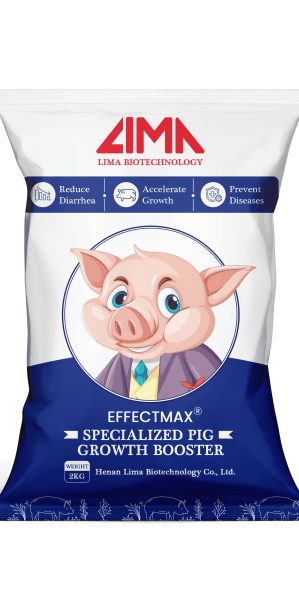
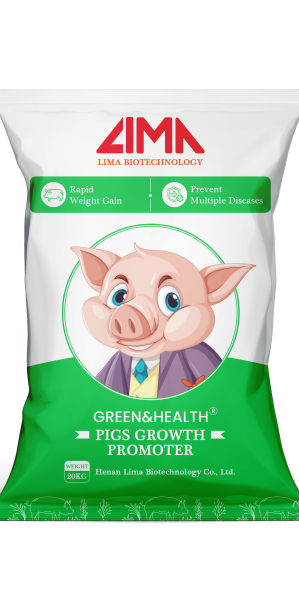
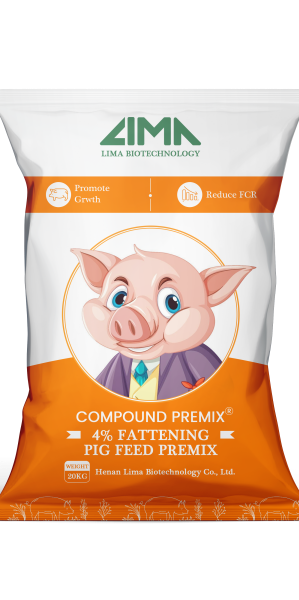
Pig Growth Promoter in Kenya-Lima Biotech Green&Health®
Core Ingredients and Mechanism of Action:
-Formulated with three key nutrients: Probiotics balance gut microbiota to enhance feed digestion and absorption efficiency; amino acids and proteins directly support pig growth and development while strengthening immunity; vitamins and minerals supplement essential trace elements for growth, ensuring normal physiological functions.
-Formulated with plant powders, trace elements, and complex multivitamins through innovative fermentation technology, it is rich in active probiotics and their metabolic byproducts. Its mechanism centers on maintaining gut microecological balance—where beneficial bacteria dominate healthy pig intestines. Metabolic byproducts deliver essential nutrients like vitamins, minerals, amino acids, and enzymes to fully support normal growth. Pig Growth Enhancer further promotes nutrient absorption by supplementing beneficial bacteria and regulating microbial balance, enabling rapid and healthy growth in pigs.
Core Functional Advantages:
1. Significant Weight Gain and Fattening Effects: When used throughout the entire fattening phase, pigs can be marketed 15 days earlier, achieving a total weight gain of 10-15 kg. From weaning to the end of nursery phase, piglets gain at least 1.5 kg, effectively shortening the farming cycle and improving market-ready efficiency.
2. Gut Health & Disease Prevention: Effectively controls diarrhea, improves intestinal function, and reduces morbidity in newborn piglets. Simultaneously prevents and alleviates reproductive issues in sows such as mastitis and endometritis, enhancing overall survival rates.
3. Reproductive Performance Optimization: For sows, it regulates reproductive system function, promotes early estrus, increases litter size, extends reproductive cycles and service life, while boosting milk production to ensure healthy piglet growth.
4. Farm Environment Improvement: Reduces feed wastage and lowers farming costs; simultaneously eliminates ammonia and unpleasant odors in pens, optimizing the farming environment and reducing triggers for respiratory diseases.
5. Enhanced Constitution and Immunity: Comprehensively improves swine constitution, strengthens resistance, reduces the risk of multiple diseases, and builds a robust health foundation for efficient farming.
Scientific Usage Method:
Easy to use, with flexible dosage adjustments based on the health status of pigs:
-Standard Farming Scenarios: Add 2% by feed weight for long-term use to continuously promote growth and protect health.
-Special Circumstances: When pigs are weak, experiencing diarrhea, or respiratory diseases, increase the dosage to 4% to specifically improve health and aid rapid recovery.
To better serve Kenyan farmers, Lima Biotech has established authorized agents in Kenya. Whether small-scale family farms or large-scale breeding bases, farmers can quickly obtain products and access nearby technical support through local agents. This significantly reduces procurement costs and farming risks, enabling the scientific fattening advantages of Pig Growth Booster to be fully realized in Kenyan farming scenarios.
Frequently Asked Questions About Pig Farming in Kenya
Question 1: How long is the gestation period for sows?
Answer: The gestation period for sows typically lasts around 114 days (approximately 3 months, 3 weeks, and 3 days). Farmers can prepare the farrowing pen one week in advance by recording the mating date (disinfecting, laying down bedding, installing heat lamps) to ensure smooth delivery.
Question 2: What is the optimal temperature for piglets?
Answer: Piglets are sensitive to temperature, with varying optimal ranges by age:
- 1-7 days old: 32-35°C (86-95°F)
- 8-14 days old: 28-35°C (82-95°F)
- 15-30 days old: 25-28°C (77-82°F)
- Over 30 days old: Gradually reduce to 20-25°C (68-77°F) It is recommended to install thermometers in the piglet pen and regulate temperature using heat lamps or heating pads to prevent hypothermia-induced colds or growth retardation in piglets.
Question 3: What are the main components of pig feed?
Answer: The primary components of pig feed are energy sources and protein sources. Energy sources provide the energy required for pig growth, accounting for 60%-70% of the feed composition. Common examples include corn bran, cassava flour, and sorghum bran. Protein sources supply amino acids, comprising 15%-30% of the feed composition. Common examples include soybean meal, fish meal, and Omena (dried local small fish). Additionally, feed requires small amounts of minerals (e.g., calcium, phosphorus), vitamins (e.g., vitamins A, D), and additives (e.g., probiotics).
Question 4: How many piglets can a sow produce in one litter?
Answer: A healthy sow typically produces 8-12 piglets per litter. The exact number depends on breed, age, and husbandry practices. Breeds like Large White and Landrace have higher litter sizes (10-12 piglets per litter). First-time sows (primiparous) tend to have smaller litters (6-8 piglets), while multiparous sows (2+ litters) produce more consistent numbers.
Question 5: What is the best method to prevent swine diseases?
Answer: The optimal approach involves establishing an integrated system of “biosecurity + vaccination + daily management”: 1. Strictly control access of external personnel and vehicles to the farm, with regular disinfection; 2. Administer vaccines for African swine fever, foot-and-mouth disease, etc., according to the immunization schedule; 3. Provide clean drinking water and high-quality feed, avoiding moldy feed; 4. Conduct regular deworming and maintain pig barn hygiene. Compared to treating diseases after they occur, prevention is more cost-effective and prevents growth stagnation in pigs.
- About Lima Biotech
- Careers-Lima Biotech
- Code of Conduct-Lima Biotech
- Conditions of Sale-Lima Biotech
- Contact-Lima Biotech
- Cookies Policy-Lima Biotech
- Find Agent-Lima Biotech
- Global Warehouses
- Investor Relations-Lima Biotech
- Legal Information-Lima Biotech
- Privacy Policy-Lima Biotech
- Success-Lima Biotech
- Sustainability-Lima Biotech
- World Class Manufacturing-Lima Biotech
Prev:
Technical Articles
4 Secrets That Will Boost the Growth of Your Pigs
6 Pig Feed Formulations Each For Starters, Growers And Finishers
Challenges of Pig Farming in Cameroon
Forget Crude Protein: Why Peptide Quality Matters for African Pig Farmers
Growth Promoters in Pig Farming
How can I Increase my Pig’s Growth Quickly in Cameroon