













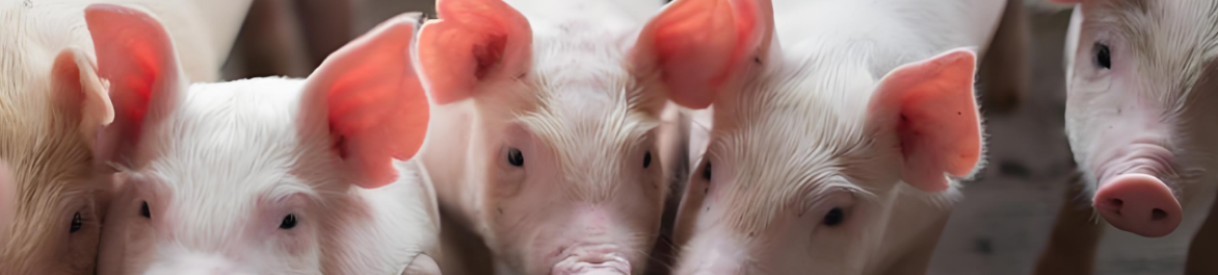
Farmers seeking effective pig growth promoters face significant hurdles. The market is saturated with products, making it hard to choose a formulation that works. International brands are often overpriced, while domestic products offer inconsistent results. Critically, many solutions are not adapted to local climates, leading to poor performance. A lack of expert guidance and the risk of “cost traps”—cheap products that increase feed or veterinary bills—often lead to wasted resources and higher overall costs.
Common Challenges Faced by Pig Farmers
Despite the significant potential of the pig farming industry in Cameroon, farmers face a myriad of challenges that limit their productivity and profitability. One of the most pressing issues is the slow growth rate of pigs, which leads to extended farming cycles and increased production costs . This problem is often exacerbated by inadequate nutrition, poor management practices, and a lack of access to high-quality feed and supplements. The variability in growth rates among different herds is a major concern, as it makes it difficult for farmers to plan and manage their operations effectively.
Slow Growth Rates and Extended Farming Cycles
One of the most persistent and costly challenges for pig farmers in Cameroon is the issue of slow growth rates, which directly translates into extended farming cycles and reduced profitability. Many farmers find that their pigs take longer to reach market weight compared to international standards, tying up capital and resources for extended periods. This problem is often rooted in a combination of factors, including suboptimal nutrition, poor feed conversion, and inadequate management practices.
Rising Feed Costs and Low Feed Conversion Rates
The cost of feed represents the single largest expense in pig farming, often accounting for up to 70% of total production costs. In Cameroon, the rising price of feed ingredients, such as maize and soybean meal, puts immense pressure on farmers' profit margins. Compounding this issue is the problem of low feed conversion rates (FCR) , where a significant portion of the feed consumed is not efficiently converted into body weight. This inefficiency is often due to poor feed quality, imbalanced rations, and digestive issues within the pigs. This highlights the critical need for products and strategies that can enhance nutrient absorption and optimize feed utilization.
Disease Prevalence and High Mortality Rates
Disease is a constant threat to pig farmers in Cameroon, with high prevalence rates of common ailments such as diarrhea and respiratory diseases leading to significant economic losses . These health issues not only slow down growth and reduce feed efficiency but can also result in high mortality rates, particularly among young piglets. The hot and humid climate of the region can exacerbate the spread of pathogens, making biosecurity and disease prevention paramount.
Pain Points in Choosing a "Pig Growth Booster"
Market Saturation with Ineffective Products
The market for pig growth boosters and feed additives in Cameroon is currently saturated with a wide array of products, making it difficult for farmers to distinguish between effective solutions and those that offer little to no real benefit. This proliferation of products, both imported and locally produced, creates a confusing and often misleading landscape for consumers.
Formulations Not Optimized for Cameroon's Climate
A significant problem with many of the pig growth boosters available in the Cameroonian market is their lack of adaptation to the specific local conditions of the country.The climate in Cameroon is characterized by high temperatures and humidity, which can be a major source of stress for pigs. Many of the pig boosters on the market are not formulated to help pigs cope with these conditions, which can lead to a number of problems, including reduced feed intake, poor growth, and increased susceptibility to disease. A product that is not designed for use in a hot and humid climate may not be able to provide the necessary support for pigs to thrive in these conditions. This can result in a significant waste of money for farmers, who may not see any improvement in the performance of their animals.
3 Key Criteria for Choosing the "Best Pig Growth Booster"
To navigate this complex landscape, farmers and industry professionals need a clear, science-based framework for evaluating products. The following four golden standards provide a robust logic for Localized Research and Development
A one-size-fits-all approach is obsolete. The most effective products are those developed with specific climate zones in mind. Formulations must be optimized to reduce environmental stress, whether it’s combating heat stress in tropical regions or supporting energy metabolism in colder climates. For instance, a multinational enterprise’s trial base in Southeast Asia demonstrated that an anti-heat-stress formula could increase average daily weight gain by 18%. This proves that a superior pig growth booster is not just about ingredients, but about how those ingredients are calibrated for the local environment.
Comprehensive Nutritional Support
A truly effective product must deliver a golden ratio of proteins, amino acids, vitamins, and probiotics. Advanced techniques, such as optimizing the ratio of digestible amino acids, ensure that the pig’s nutritional needs are met with maximum efficiency and minimal waste. Scientifically balanced formulations have been shown to improve feed conversion rates by 15%-20%, which not only boosts growth but also reduces nitrogen emissions, lessening the environmental impact of the farm.
Integrated Disease Prevention
The future of swine production is moving away from routine antibiotics and towards proactive health management. The best products integrate natural immune-boosting ingredients like plant extracts and microecological agents to fortify the pig’s natural defenses. This preventative approach is not just better for animal welfare; it makes economic sense. The cost of preventing a disease outbreak is a fraction of the cost of treating one, making an integrated health solution a financially sound investment.
Full-Cycle Cost-Benefit Model
Smart decisions are based on total return on investment (ROI), not just the price per kilo of a product. Farmers should evaluate solutions based on a full-cycle cost-benefit model, from weaner to market hog. This involves calculating the total cost savings from improved feed efficiency, reduced medication, and faster time-to-market.
Reality for Pig Farmers in Cameroon
To illustrate how these principles apply in the real world, let’s examine the vibrant yet challenging pig farming industry in Cameroon. Here, the global issues manifest in specific, tangible ways.
Common Challenges Faced by Cameroonian Farmers
Despite its significant potential, Cameroon’s pig farmers are hampered by slow growth rates, which extend farming cycles and increase production costs. This is often rooted in suboptimal nutrition and poor feed conversion. Compounding this is the rising cost of feed, which can account for up to 70% of total production costs, squeezing profit margins.
Furthermore, disease is a constant threat. The hot and humid climate exacerbates the spread of ailments like diarrhea and respiratory diseases, leading to high mortality rates, particularly among young piglets. These health issues not only slow growth but also result in significant economic losses.
Pain Points in Choosing a “Pig Growth Booster” in Cameroon
The market for pig growth boosters in Cameroon is saturated with products, creating a confusing landscape. A critical problem is that many formulations are not optimized for Cameroon’s climate. Products designed for temperate zones often fail to help pigs cope with heat stress, leading to reduced feed intake and increased susceptibility to disease. This results in wasted money for farmers who see no improvement in their animals’ performance.
The Solution in Action: Lima Biotech’s “Pig Growth Booster”
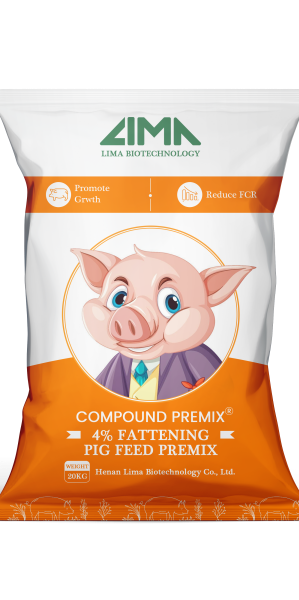
This is where a product built on the golden standards makes a tangible difference. Lima Biotech’s “Pig Growth Enhancer” was developed with these local challenges in mind.
- Product Profile: Made from 100% natural ingredients, including bioactive peptides, plant polysaccharides, probiotics, and a balanced mix of nutrients.
- Mechanism of Action: It works by improving the intestinal flora, which enhances digestion and nutrient absorption. The probiotics help maintain a healthy gut, reducing digestive disorders like diarrhea.
- Proven Results: Case studies on farms in Bafoussam and Bamenda have demonstrated its positive impact. Pigs fed with the product showed higher average daily weight gain and lower mortality rates, directly translating to shorter farming cycles and higher profits for farmers.
Spotlight on the Best: Lima Biotech's "Pig Growth Booster"
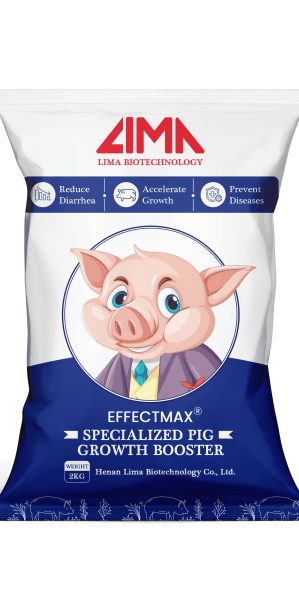
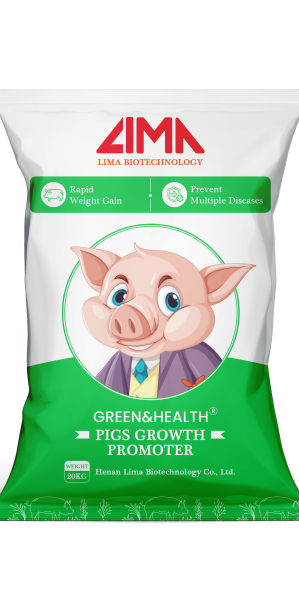
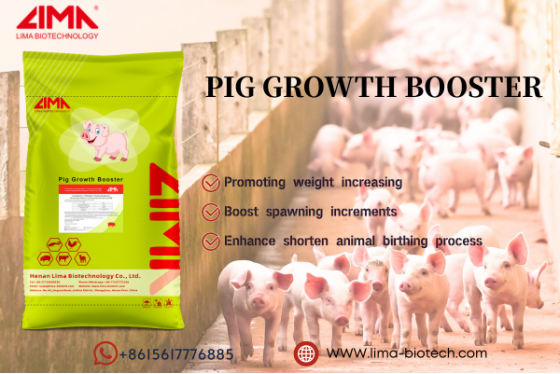
Product Profile: "Pig Growth Enhancer"
Key Ingredients and Composition
Lima Biotech's "Pig Growth Booster" is a specialized feed additive made from 100% natural ingredients, including bioactive peptides and plant polysaccharides . The product is formulated with a unique blend of probiotics, amino acids, proteins, vitamins, and minerals that work together to promote animal health and growth . The product is also rich in various beneficial bioactive substances that can promote the growth of pigs without having a negative impact on the environment.
Mechanism of Action: How it Works
Lima Biotech's "Pig Growth Booster" works by improving the intestinal flora of the animals, which helps to enhance digestion and absorption of nutrients . The probiotics in the product help to maintain a healthy balance of microorganisms in the gut, which can help to reduce the incidence of digestive disorders such as diarrhea . The product also contains a variety of beneficial components that work together to have a significant positive impact on the growth and health of pigs.
Key Features and Benefits
The "Pig Growth Booster" from Lima Biotech offers a range of key features and benefits that make it an ideal choice for pig farmers in Cameroon. The product is designed to promote rapid and healthy growth, improve feed efficiency, and enhance the overall health and well-being of pigs. The inclusion of natural immune-boosting ingredients helps to strengthen the pigs' natural defenses, reducing the risk of disease and the need for antibiotics. The product is also easy to use and can be easily incorporated into existing feed programs, making it a convenient and practical solution for farmers of all scales.
Proven Results
Case studies conducted on farms in Cameroon have demonstrated the positive impact of Lima Biotech's "Pig Growth Booster" on pig production. These studies have shown that pigs fed with the product have a higher average daily weight gain and a lower mortality rate compared to pigs that are not fed with the product. The results of these case studies provide concrete evidence of the product's effectiveness and its ability to deliver a significant return on investment for farmers.

How to Use "Pig Growth Booster"
Dosage and Administration
The recommended dosage of Lima Biotech's "Pig Growth Booster" is 1 kg per ton of feed. The product should be thoroughly mixed with the feed to ensure that it is evenly distributed. It is important to follow the recommended dosage to achieve the best results.
Integration into Existing Feed Programs
The "Pig Growth Booster" can be easily integrated into existing feed programs. The product is compatible with a wide range of feed ingredients and can be used with both commercial and home-mixed feeds. It is recommended to start using the product as soon as the pigs are weaned and to continue using it until they reach market weight.
conclusion
As the Cameroon pig industry evolved, it became clear that farmers were being hampered by slow growth, rising feed costs and high disease rates. In light of these challenges, we have identified the gold standard for the "Best Pig Booster" through a practical background: localised development to suit the climate, comprehensive nutritional support for growth, and an integrated disease prevention system. Lima Biotech's Pig Growth Booster, developed in Cameroon's unique high-temperature, high-humidity environment, optimises intestinal flora and improves feed conversion, and has been proven to be highly effective in the Bafoussam and Bamenda centres: daily pig weight gain has increased, mortality has decreased, and pig production has improved. Increased daily pig weight gain, reduced mortality rates and shorter farming cycles translate directly into higher value for farmers.
Prev:
Technical Articles
4 Secrets That Will Boost the Growth of Your Pigs
6 Pig Feed Formulations Each For Starters, Growers And Finishers
Challenges of Pig Farming in Cameroon
Forget Crude Protein: Why Peptide Quality Matters for African Pig Farmers
Growth Promoters in Pig Farming
How can I Increase my Pig’s Growth Quickly in Cameroon
How can I make my pig grow bigger and faster in Uganda
How to Calculate the FCR for Pig Farming? What are the Reasons for a High FCR ?
How to get your pigs to gain weight fast
How to make a pig gain weight quickly
How to Feed Pigs for Maximum Weight Gain?